
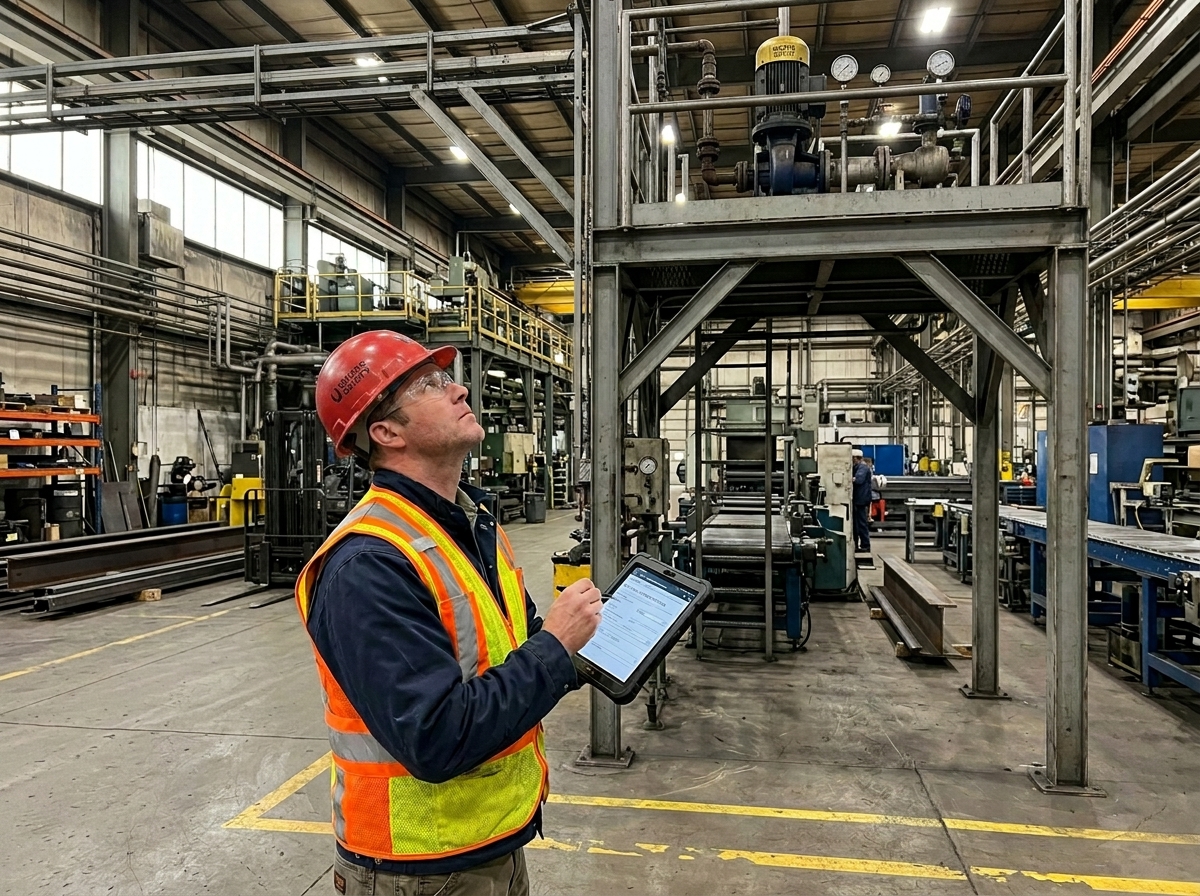
The Ultimate Safety Inspection Checklist Guide: All Industries
Why Most Safety Inspection Checklists Fail
A UK manufacturing company conducted monthly safety inspections for six years. Inspections were completed on schedule. Reports were filed. Corrective actions were generated. Scores trended upward.
Then an independent safety consultant was commissioned to assess the program. She spent three days conducting her own inspection of the same facility. Her report found 47 significant safety findings — 22 of which were items that had been consistently rated "satisfactory" or "compliant" on the in-house inspection reports.
The in-house program had not failed because the inspectors were careless. It had failed because:
- The checklist was designed for compliance verification, not safety observation
- Inspectors had conducted the same route, in the same order, so many times that they no longer saw what they were looking at
- Corrective actions were generated but rarely verified as effectively implemented
- The same findings recurred because root causes were never addressed
A safety inspection is only as valuable as the judgment it brings to what it observes, the specificity of what it records, and the follow-through it generates.
What a Safety Inspection Is — and What It Isn't
A safety inspection is: A systematic, documented assessment of physical conditions, equipment, work practices, and management system elements to identify hazards and verify that controls are functioning.
A safety inspection is not:
- A compliance audit (audits assess the management system against a standard; inspections assess physical conditions and practices)
- A substitute for risk assessment (inspections observe current conditions; risk assessments evaluate all potential conditions)
- A paperwork exercise (completing the form without genuine observation produces documentation, not safety)
Types of Safety Inspections
| Type | Description | Frequency | Conducted By |
|---|---|---|---|
| Planned general inspection | Systematic inspection of a defined area or process | Monthly, quarterly | Safety officer, management team |
| Pre-task inspection | Inspection before a specific high-risk task | Before each high-risk task | Task supervisor |
| Equipment pre-use inspection | Check of specific equipment before operation | Daily (shift start) | Equipment operator |
| Management safety walk | Leadership observation of safety in the field | Weekly, monthly | Senior management |
| Specialist inspection | Focused technical inspection (electrical, racking, lifting equipment) | Annually or to manufacturer specification | Competent person/specialist |
| Regulatory inspection | Inspection by external regulatory authority | Varies by jurisdiction | Regulatory inspector |
| Permit to work verification | Verification of permit conditions before work begins | Each permit | Permit authorizing authority |
7 Principles of an Effective Safety Inspection
Principle 1: Observe, Don't Just Verify
The most common inspection failure is checking whether documentation exists rather than whether conditions are actually safe. "Training records signed — ✓" does not mean workers are competent. "Forklift inspection log complete — ✓" does not mean the forklift is safe.
Effective inspection requires going to the location, observing the actual conditions, and asking questions of the people doing the work.
Principle 2: Look for What's Not There
Inspections naturally focus on things that are present. What's harder to observe — and often more important — is what's missing:
- The safety sign that should be there but isn't
- The PPE that workers should be wearing but aren't
- The guard that should be in place but has been removed
- The first aid kit that should be stocked but is depleted
Developing the habit of asking "what should be here that isn't?" transforms inspection quality.
Principle 3: Ask the People Doing the Work
Workers often know more about the hazards in their area than any inspection checklist can reveal. Questions like "What do you do when the equipment malfunctions?" or "What's the most dangerous thing about this job?" frequently surface hazards that visual observation would miss.
Principle 4: Vary Your Route and Timing
Predictable inspections become invisible. If the inspection always starts at the entrance and follows the same route, the facility adapts. Issues near the inspection starting point get addressed; issues at the far end of the route don't get addressed because they're rarely inspected closely.
Vary the inspection route. Inspect at different times of day and different points in the production cycle. Visit areas when they're running at full capacity, not only during slower periods.
Principle 5: Record Specifically, Not Generally
"Housekeeping — needs improvement" is a worthless inspection finding. "Corridor adjacent to Press #4 blocked by 6 unpalletized cardboard boxes, creating a slip and trip hazard and blocking the emergency exit route" is a finding that can be acted on.
Every finding should specify: what the problem is, exactly where it is, what the hazard is, and what control is required.
Principle 6: Generate Corrective Actions with Owners and Deadlines
An inspection finding without an assigned corrective action is a documented complaint. A corrective action without an assigned owner and deadline is an aspiration. Effective inspection programs generate specific, assigned, time-bound corrective actions for every significant finding — before the inspector leaves the area.
Principle 7: Close the Loop
An inspection program that generates corrective actions but never verifies that they were effectively implemented has the same effectiveness as one that generates no corrective actions at all. Corrective action closure rates, repeat finding rates, and finding recurrence are the most important indicators of whether an inspection program is actually improving safety.
Designing an Inspection Checklist
The Problem with Generic Checklists
Generic inspection checklists produce generic findings. A "warehouse safety checklist" that is equally applicable to a cold storage facility, a hazardous materials warehouse, and an e-commerce fulfillment center will surface only the lowest common denominator hazards — those shared across all three. The site-specific hazards (ammonia refrigeration in the cold store, chemical storage compatibility in the hazmat facility, conveyor systems in the fulfillment center) will not be captured.
Effective checklists are:
- Specific to the facility type and its actual operations
- Updated when operations, equipment, or materials change
- Developed with input from the workers in the area
- Reviewed and refined based on inspection findings
Checklist Structure
An effective safety inspection checklist includes:
1. Administrative section:
- Inspection date, location, inspector name
- Scope and area covered
- Previous findings status (what from last time is still open?)
2. Hazard category sections: Organized by hazard category rather than by location. Categories might include:
- Fire safety
- Machinery and equipment
- Electrical safety
- Manual handling and ergonomics
- Chemical hazards
- Emergency preparedness
- PPE compliance
- Housekeeping
3. For each item:
- Specific, observable condition to assess (not "fire safety adequate")
- Guidance on what to look for (not every inspector has the same reference knowledge)
- Finding options: Compliant / Non-compliant / N/A (not "Good/Average/Poor")
- Space for specific finding description and photo reference
- Corrective action assignment (owner, deadline)
4. Summary section:
- Critical findings (immediate action required)
- Overall assessment
- Comparison to previous inspection
Industry-Specific Checklist Frameworks
FindRisk has published detailed inspection checklists for several industry types. These serve as starting points — they must be adapted to the specific facility:
| Industry | Checklist Reference | Key Hazard Categories |
|---|---|---|
| Construction | Construction Site Safety Inspection | Falls from height, excavations, electrical, mobile plant |
| Warehouse and logistics | Warehouse and Logistics Safety Checklist | Forklifts, racking, manual handling, dock safety |
| Oil and gas | Oil & Gas Safety Inspection Checklist | Process containment, H₂S, well control, dropped objects |
| Manufacturing | Manufacturing Safety Inspection Checklist | Machine guarding, electrical, chemical, ergonomics |
| Food processing | Food Industry Safety Checklist | Cutting equipment, slippery floors, cold environments, chemical cleaning |
Common Inspection Failures — and How to Fix Them
| Failure | Why It Happens | Fix |
|---|---|---|
| "Satisfactory" without observation | Inspector checks the box without looking | Require photo evidence for all compliance findings; validate that something was actually observed |
| Same findings every month | Corrective actions are generated but root causes not addressed | Track recurrence; demand root cause analysis for repeat findings |
| Corrective actions never closed | No follow-up process; no accountability | Track closure rate; flag overdue actions; escalate to management |
| Inspectors avoid difficult areas | Certain areas or topics are consistently not found | Compare findings per area; question why high-risk areas have low finding rates |
| Only the inspector's area is inspected | Departments inspect themselves | Rotate inspection responsibility; use cross-departmental teams |
| No worker input | Inspection is conducted without asking workers | Include worker interviews as a required inspection element |
The Digital Advantage in Safety Inspections
Traditional paper inspections have structural limitations that digital platforms resolve:
| Capability | Paper Inspection | Digital Inspection Platform |
|---|---|---|
| Inspection verification | Form can be signed without inspection being conducted | GPS timestamp verifies inspection location and time |
| Photo integration | Requires separate device; rarely embedded in report | Photos captured in workflow, embedded in report automatically |
| Corrective action assignment | Requires transcription; typically days delayed | Immediate assignment from field; owner and deadline set before leaving area |
| Trend analysis | Manual compilation; rarely done | Automatic aggregation of all findings across inspections |
| Version control | Outdated forms in circulation | Inspectors always use current checklist version |
| Corrective action closure | Tracked separately; often lost | Integrated CAPA tracking in same platform |
See: Digital vs Paper Safety Inspections
How FindRisk Supports Safety Inspections
AI-assisted checklist generation: Rather than using a generic template, FindRisk generates a contextually relevant checklist based on your description of the inspection area, tasks, and equipment. The AI surfaces hazards specific to your context that a standard template would miss.
Integrated photo documentation: Photos are captured within the inspection workflow, annotated with hazard markings, and embedded in the automatically generated PDF report. Photos are GPS-tagged and timestamped — verifying that the inspection occurred at the claimed location.
Fine-Kinney risk scoring: Each finding is scored automatically using the Fine-Kinney methodology — producing a ranked corrective action list that prioritizes the highest-risk findings.
Immediate CAPA generation: Every finding generates a corrective action with an assigned owner and deadline — set before the inspector leaves the area. No transcription, no delay.
Trend analysis: All inspection data is aggregated across inspections, locations, and time periods. Repeat findings, trending high-risk areas, and corrective action closure rates are visible without manual compilation.
Offline operation: FindRisk works without connectivity. Inspections are completed on-device and synchronized when connectivity is restored. No dependency on network availability in the field.
Frequently Asked Questions
How often should safety inspections be conducted?
Inspection frequency depends on the risk level of the area, regulatory requirements, and the results of previous inspections. General guidance: high-risk areas (chemical processing, machinery-intensive production) benefit from weekly or monthly inspections; medium-risk areas (general warehousing, offices) from monthly or quarterly inspections; specialist inspections (lifting equipment, pressure vessels, electrical) follow manufacturer specifications and regulatory requirements. ISO 45001 requires a risk-based approach to inspection frequency.
Who should conduct safety inspections?
Inspections are most effective when conducted by someone with enough independence to identify problems objectively and enough technical knowledge to recognize what they're seeing. This typically means: safety officers for general inspections; specialist competent persons for technical inspections; management for safety walks. Workers from adjacent areas (not inspecting their own area) can bring fresh eyes to routine inspections.
What should happen if an inspector finds an immediately dangerous condition?
An immediately dangerous condition — one that poses an immediate risk of serious injury or death — requires immediate action: stop the work, isolate or contain the hazard, and inform management before continuing the inspection. This is not a finding that can be logged and addressed in the next corrective action cycle. ISO 45001 and virtually all OHS regulatory frameworks require that immediately dangerous conditions be addressed without delay.
How do I get workers to report hazards rather than waiting for inspections?
Hazard and near-miss reporting by workers is far more valuable than periodic inspections — workers observe hazards continuously, while inspectors observe them for a few hours per month. Creating a reporting culture requires: a simple, accessible reporting mechanism; visible follow-up on every report (closing the feedback loop); recognition for reporting without penalizing reporters; and management behavior that demonstrates that reports lead to improvements. See: Near Miss Reporting Guide
Conclusion
Safety inspection is one of the fundamental tools of occupational health and safety management — it makes hazards visible, verifies that controls are functioning, and generates the data needed to identify and address systemic issues.
The quality of a safety inspection program is not determined by how many inspections are conducted or how many checklists are completed. It is determined by the quality of observation, the specificity of findings, the follow-through on corrective actions, and the systemic learning that results.
An inspection program that consistently finds the same hazards in the same places without resolving them has generated documentation. An inspection program that identifies hazards, assigns effective corrective actions, closes them out, and monitors for recurrence has generated safety.
Download FindRisk to conduct AI-assisted safety inspections with contextually relevant checklists, integrated photo documentation, immediate corrective action assignment, and professional PDF reports — from any field location, online or offline.
Try FindRisk
Ready to modernize your safety workflow?
Conduct AI-powered risk assessments, generate reports instantly, and keep your team safe — anywhere, anytime.