

Fine-Kinney Method: The Complete Guide to Quantitative Risk Assessment
What is the Fine-Kinney Method?
The Fine-Kinney method (also known as the Kinney method) is a quantitative risk assessment technique developed by G.F. Kinney and A.D. Wiruth in 1976. It provides a systematic, numerical approach to evaluating workplace risks and is widely used in industries such as manufacturing, construction, oil & gas, and chemical processing.
Unlike simple qualitative approaches (low/medium/high), the Fine-Kinney method assigns numerical values to three key factors, producing a Risk Score (R) that allows for objective comparison and prioritization.
The Fine-Kinney Formula
R = P × F × C
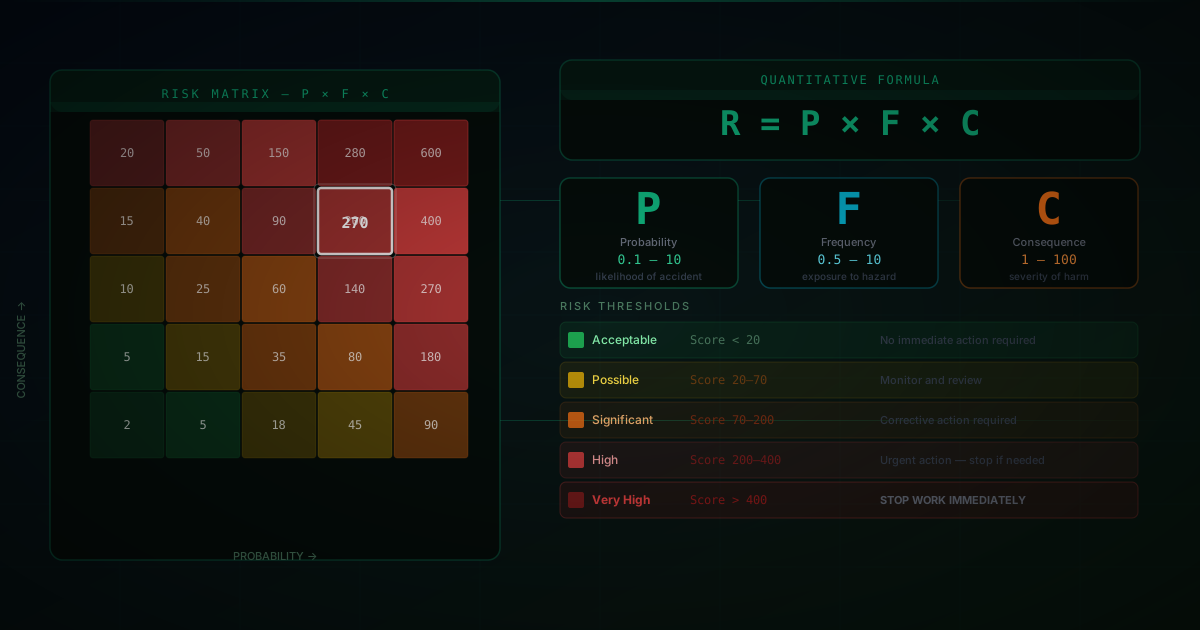
Where:
- P = Probability of the accident occurring
- F = Frequency of exposure to the hazard
- C = Consequence (severity) if the accident occurs
Probability (P) Values
| Value | Description |
|---|---|
| 10 | Very likely — expected to happen |
| 6 | Quite possible |
| 3 | Unusual but possible |
| 1 | Only remotely possible |
| 0.5 | Very unlikely, but conceivable |
| 0.2 | Practically impossible |
| 0.1 | Virtually impossible |
Frequency (F) Values
| Value | Description |
|---|---|
| 10 | Continuously (many times per day) |
| 6 | Frequently (approximately once daily) |
| 3 | Occasionally (once per week/month) |
| 2 | Unusual (once per month/year) |
| 1 | Rarely (once per year) |
| 0.5 | Remotely (once per several years) |
Consequence (C) Values
| Value | Description |
|---|---|
| 100 | Catastrophic — many fatalities |
| 40 | Disaster — a few fatalities |
| 15 | Very serious — one fatality |
| 7 | Serious — severe injuries |
| 3 | Important — disability |
| 1 | Noticeable — first aid needed |
Risk Score Interpretation
| Risk Score (R) | Risk Level | Required Action |
|---|---|---|
| > 400 | Very High | Stop work immediately |
| 200–400 | High | Urgent corrective action |
| 70–200 | Significant | Corrective action required |
| 20–70 | Possible | Attention needed |
| < 20 | Acceptable | No immediate action |
Practical Example
Scenario: A worker regularly accesses a rooftop maintenance area without fall protection.
- Probability (P): 3 — A fall is unusual but possible
- Frequency (F): 6 — Worker accesses the area daily
- Consequence (C): 15 — A fall could result in one fatality
R = 3 × 6 × 15 = 270
With a score of 270, this falls into the High category, requiring urgent corrective action — in this case, installing guardrails and providing a fall arrest harness.
Advantages of the Fine-Kinney Method
- Objective: Numerical scores reduce subjectivity in risk evaluation
- Comparable: Allows direct comparison of different risks
- Prioritizable: Helps allocate resources to highest-risk areas first
- Auditable: Provides a clear, documented trail for compliance
- Flexible: Can be adapted to any industry or work environment
Limitations
- The numerical values involve some subjectivity — different assessors may assign different scores
- Not all risks can be meaningfully quantified
- Results should always be reviewed by experienced safety professionals
Automating Fine-Kinney with FindRisk
FindRisk's AI-powered platform automates the entire Fine-Kinney process:
- Digital forms: Enter P, F, and C values on your mobile device
- Auto-calculation: Risk scores computed instantly
- Visual indicators: Color-coded risk levels at a glance
- Report generation: Professional PDF reports with all data
- Action tracking: Assign and monitor corrective actions
Conclusion
The Fine-Kinney method is one of the most reliable tools in an OHS professional's toolkit. By assigning objective numerical values to probability, frequency, and consequence, it enables better decision-making, resource allocation, and regulatory compliance.
Download FindRisk to start conducting Fine-Kinney assessments digitally — faster, more accurately, and from anywhere.
Try FindRisk
Ready to modernize your safety workflow?
Conduct AI-powered risk assessments, generate reports instantly, and keep your team safe — anywhere, anytime.