
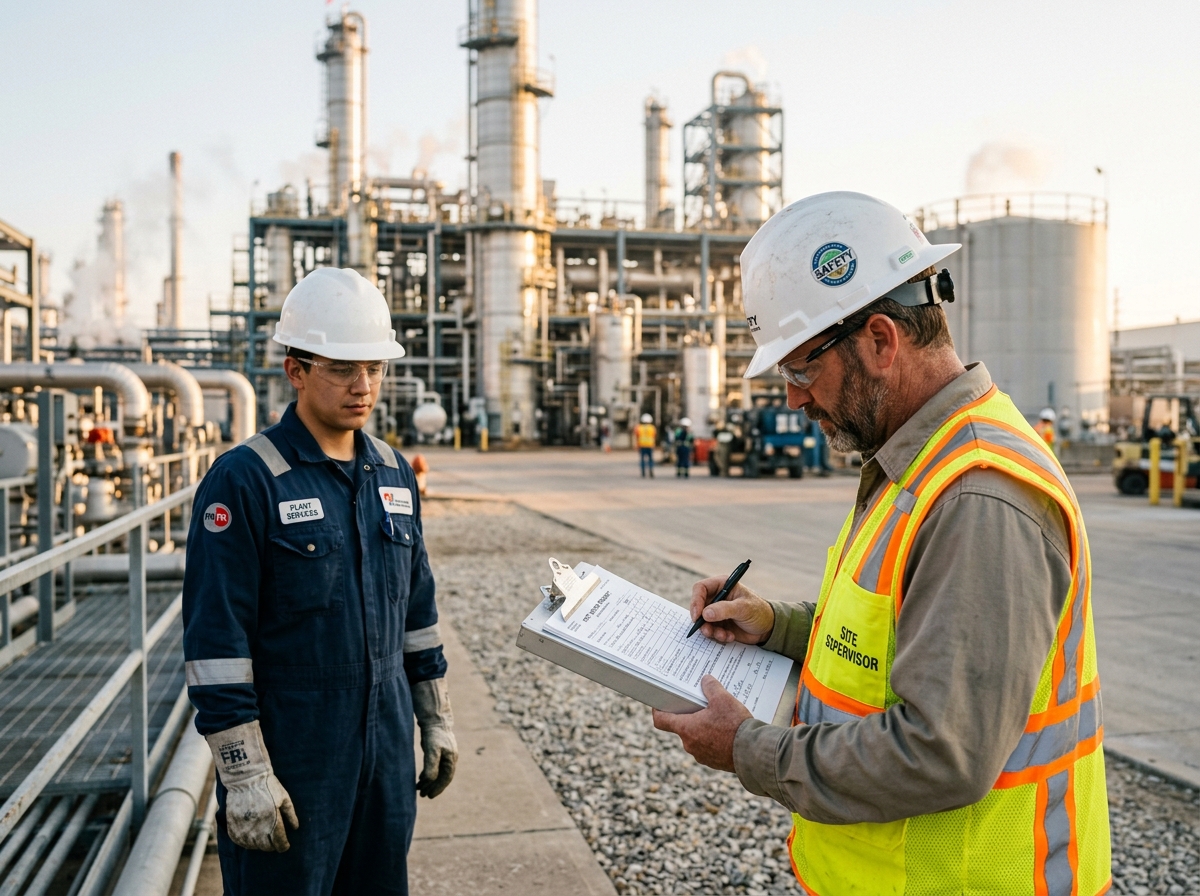
Permit to Work System: The Complete Guide for High-Risk Operations
The Incident That Should Never Happen
In 2005, an explosion at the BP Texas City refinery killed 15 workers and injured 180 others. Investigators identified multiple systemic failures — among them, inadequate control of simultaneous operations and a breakdown in the facility's Permit to Work process. Workers were unaware of activities happening in adjacent units. Critical hazards were not communicated. Authorizations were incomplete.
This is not an isolated case. A significant proportion of major industrial accidents share a common thread: the Permit to Work system either did not exist, was poorly implemented, or was bypassed under operational pressure.
A robust Permit to Work system is not bureaucracy. It is the last structured barrier between a high-risk task and an irreversible outcome.
What Is a Permit to Work System?
A Permit to Work (PTW) system is a formal, documented safety management system that controls how hazardous or non-routine work is planned, authorized, executed, and closed out.
It is not simply a form. It is a complete process that:
- Identifies all hazards associated with a specific task before work begins
- Defines the control measures that must be in place before authorization is granted
- Establishes who is responsible for each stage of the work
- Creates a documented record that the work was carried out safely and in compliance with defined standards
- Prevents simultaneous operations that could create new, combined hazards
The Permit to Work concept is sometimes described as a "living document" — it reflects the actual state of the work area at the time the permit is issued, not a generic assumption about what is normally safe.
When Is a Permit to Work Required?
PTW systems apply to non-routine, high-risk work — tasks where the normal safe system of work is insufficient and additional formal controls are needed. Common triggers include:
- Work involving sources of ignition near flammable materials (hot work)
- Entry into enclosed spaces with restricted access and potential atmospheric hazards (confined space)
- Work on electrical systems above defined voltage thresholds
- Work at height above a specified elevation (typically 1.8m–2m)
- Excavation and ground disturbance in areas with buried services
- Work on or near pressurized or hazardous pipelines
- Work that requires isolation of energy sources (lockout/tagout)
- Simultaneous operations where one activity could affect another
Some organizations also issue permits for routine maintenance tasks that have been formally assessed as requiring elevated control — for example, working with specific chemical compounds or operating certain categories of heavy equipment.
The 6 Types of Work Permits
Different hazard types require different permit categories. Most industrial facilities use a combination of the following:
1. Hot Work Permit
Applies to: Any task that generates heat, sparks, or open flame — welding, cutting, grinding, brazing, use of heat guns.
Key controls:
- Verification that the atmosphere is below the Lower Explosive Limit (LEL)
- Removal or protection of all flammable materials within a defined radius (typically 10–15 meters)
- Fire watch assigned and present during work and for a defined period after completion
- Fire suppression equipment on standby
- Communication with adjacent work areas to prevent simultaneous flammable releases
Hot work permits are among the most frequently issued — and the most commonly involved in serious incidents when bypassed or improperly authorized.
2. Confined Space Entry Permit
Applies to: Any entry into a space that is large enough for a person to work inside, has limited or restricted means of entry or exit, and is not designed for continuous human occupancy. Examples: tanks, vessels, silos, hoppers, underground vaults, sewers.
Key controls:
- Atmospheric testing for oxygen content (19.5%–23.5%), flammable gases (< 10% LEL), and toxic substances before and during entry
- Continuous forced ventilation where required
- Communication system between entrant and attendant
- Non-entry rescue equipment on standby before work begins
- Rescue plan documented and tested
- Isolation of all energy and substance inputs to the space
Confined space incidents have a distinctive and deadly pattern: the initial victim loses consciousness, a rescuer enters without proper equipment, and multiple fatalities result. The permit process is specifically designed to prevent uncontrolled entry.
3. Electrical Isolation Permit (Lockout/Tagout)
Applies to: Work on or near energized electrical systems, equipment requiring de-energization before maintenance, or any task where inadvertent re-energization could cause harm.
Key controls:
- Identification of all energy sources (electrical, hydraulic, pneumatic, stored mechanical energy)
- Complete isolation and de-energization of each source
- Physical lockout devices applied by each worker who will perform the work (personal padlock)
- Verification that the equipment is in a zero-energy state before work begins
- Defined re-energization procedure with sign-off at each step
Electrical permits interact closely with Hot Work permits — welding on equipment that has not been properly de-energized combines two of the most serious risk categories.
4. Working at Height Permit
Applies to: Work above a defined elevation threshold, typically 1.8m–2m, where a fall could cause injury — scaffolding, ladders, elevated work platforms, roof work, crane operations.
Key controls:
- Verification of fall prevention equipment (guardrails, toe boards) or fall arrest systems (harness, lanyard, anchor point)
- Inspection record for all equipment before use
- Definition of exclusion zones below the work area
- Weather conditions assessment (wind speed, visibility, ice/rain)
- Rescue plan for a worker who falls and is suspended
5. Excavation and Ground Disturbance Permit
Applies to: Any dig, trench, boring, or ground disturbance in areas where underground services (gas, electricity, water, telecommunications) may be present.
Key controls:
- Utility drawings reviewed and underground services marked
- Hand-digging zone defined around marked services
- Shoring or benching requirements for excavations exceeding defined depths
- Daily inspection of trench stability by a competent person
- Exclusion of plant and vehicles from the proximity of open excavations
6. Cold Work Permit (General Work Permit)
Applies to: Non-routine maintenance tasks that do not involve ignition sources, energy sources, or confined spaces, but still require formal controls — for example, work in a restricted area during a shutdown, or tasks that affect the integrity of a process system.
Cold work permits are often used as a catch-all category for non-hazardous-category work that nonetheless requires formal authorization, planning, and sign-off.
The Permit to Work Process: 7 Stages
A PTW system is not just a document — it is a structured authorization process with defined responsibilities at each stage.

Stage 1: Work Request
The requesting party (typically the maintenance supervisor, contractor manager, or project engineer) identifies the work to be done and initiates the permit request. The request should include:
- Description of the task
- Location of the work
- Estimated start time and duration
- Equipment, materials, and tools required
- Names of all personnel who will perform the work
At this stage, the requesting party must also conduct a preliminary hazard identification — what are the hazards of this task, and what initial control measures are proposed?
Stage 2: Hazard Assessment
Before authorization is considered, a formal hazard assessment is conducted for the specific task in the specific location. This is distinct from the general risk assessment for the area — it accounts for the current state of the work environment.
The hazard assessment should identify:
- Task-specific hazards: What hazards are created by the work itself?
- Area hazards: What existing hazards in the work area could affect the workers?
- Interface hazards: What activities in adjacent areas could affect this work, or be affected by it?
- Simultaneous operation hazards: Is any other permitted work taking place nearby?
The Fine-Kinney method (R = P × F × C) can be applied at this stage to quantify and prioritize identified risks before determining the control measures required.
Stage 3: Isolation and Preparation
Before a permit can be authorized, all required isolations and physical preparations must be completed and verified:
- Energy sources isolated and locked out
- Atmospheric testing completed and results documented
- Exclusion zones established
- Emergency equipment positioned
- Adjacent areas notified
This stage often reveals practical issues that prevent authorization — a required isolation point is inaccessible, atmospheric conditions are not yet within safe limits, or rescue equipment is not available.
Stage 4: Authorization
The authorizing authority — a designated, trained, and competent person with the authority to permit work in the area — reviews the permit documentation, verifies that all preparations have been completed, and signs the authorization.
Authorization is not a rubber stamp. The authorizing authority must:
- Have personally verified (or received verified confirmation of) the physical state of the work area
- Be satisfied that all identified hazards have been controlled
- Understand the scope of the work being authorized
- Be aware of any other permitted activities in the area
- Have the authority to stop work if conditions change
A permit should never be authorized remotely, from memory, or under time pressure without verification.
Stage 5: Execution
Work proceeds under the conditions defined in the permit. The performing authority (the person leading the work team) is responsible for:
- Briefing all workers on the permit conditions before work begins (toolbox talk)
- Ensuring all workers have signed or acknowledged the permit
- Monitoring conditions throughout the work and stopping if conditions change
- Maintaining communication with the authorizing authority and adjacent areas
- Not allowing scope creep — if the work changes, a new or modified permit is required
The permit must be physically present at the work location throughout the duration of work. It is not sufficient for the permit to be held in an office.
Stage 6: Suspension
If work must be temporarily stopped — shift change, unexpected change in conditions, or a discovered hazard — the permit must be formally suspended. Suspension means:
- Work stops completely
- The area is made safe
- The permit is annotated with the suspension time and reason
- Conditions are re-verified before work resumes
A suspended permit must be re-authorized before work can continue.
Stage 7: Cancellation and Close-Out
When work is complete — or permanently stopped — the permit is cancelled and closed out:
- The performing authority confirms all work is complete, or the reason for stopping is documented
- All workers are accounted for and have left the area
- The work area has been restored to a safe condition (materials removed, barriers taken down, etc.)
- All isolations are removed in the correct sequence
- The cancellation is signed by both the performing authority and the authorizing authority
- The completed permit is filed and retained as a record
Failure to close out permits properly is one of the most common PTW failures — it creates a false picture of what work is ongoing and what isolations are in place.
Key Elements of a Work Permit Document
Regardless of permit type, every permit should contain these core elements:
| Element | Content |
|---|---|
| Permit number | Unique reference for tracking and audit |
| Permit type | Hot work / confined space / electrical / height / excavation / cold work |
| Work location | Precise location, including plant/unit, equipment tag, GPS coordinates |
| Task description | Specific work to be done — scope limits defined |
| Date and time | Valid from / valid until (never open-ended) |
| Personnel | Names and roles of all authorized workers |
| Hazard identification | All identified hazards for this task and location |
| Control measures | All controls required before and during work |
| Isolation details | All energy sources isolated, lockout points, test results |
| Emergency procedures | Evacuation route, rescue plan, assembly point |
| Authorizing authority | Name, signature, date/time |
| Performing authority | Name, signature, acknowledgment |
| Worker acknowledgment | All workers sign before starting work |
| Suspension record | Times, reasons, re-authorization signatures |
| Cancellation record | Completion or termination signature from both authorities |
Simultaneous Operations (SIMOPS)
One of the most complex aspects of PTW management is simultaneous operations — multiple permitted activities taking place at the same time in the same or adjacent areas.
SIMOPS management requires:
- A centralized view of all live permits in the facility at any time
- A daily coordination meeting where all active and planned permits are reviewed for conflicts
- A defined hierarchy of authority when permits interact — who has the authority to suspend or modify a permit when a conflict is identified?
- Communication protocols between the teams conducting simultaneous work
The failure to manage SIMOPS is a root cause in many major process industry incidents. An operator venting a flammable substance does not know that a hot work permit has been issued 30 meters away because the two permit holders have never been in the same room.
Permit to Work and ISO 45001
The ISO 45001 standard does not mandate a specific Permit to Work procedure, but it creates requirements that a PTW system directly satisfies:
| ISO 45001 Clause | Requirement | How PTW Satisfies It |
|---|---|---|
| Clause 6.1 | Identify hazards and assess risks | PTW hazard assessment for each task |
| Clause 8.1 | Operational planning and control | PTW authorization process controls high-risk work |
| Clause 8.1.3 | Management of change | New or modified permits required when scope changes |
| Clause 8.2 | Emergency preparedness | Emergency procedures documented in each permit |
| Clause 9.1 | Monitoring and measurement | Permit records provide audit trail of controlled work |
| Clause 10.2 | Incident investigation | Permit records are key evidence when investigating incidents involving permitted work |
For organizations pursuing ISO 45001 certification, a well-functioning PTW system provides direct evidence of compliance with Clause 8.1 operational controls — one of the most scrutinized areas in Stage 2 certification audits.
The 7 Most Common PTW Failures
A permit to work system can only protect workers if it is properly implemented. These are the failure modes that appear most often in incident investigations:
1. Permits Issued Without Physical Verification
The authorizing authority signs a permit based on assumption or past experience rather than actual verification of current conditions. Atmospheric levels, isolation status, or area conditions may have changed since the last time the task was performed.
2. Scope Creep During Work
The task evolves during execution — workers discover an additional issue and begin working on it without updating the permit. The additional work may not be covered by the existing hazard assessment or control measures.
3. Simultaneous Operations Not Managed
Multiple permits are live in adjacent areas without awareness or coordination between teams. A hot work permit is active while a flammable liquid transfer is underway nearby.
4. Pressure to Authorize Under Time Constraints
Operational, production, or maintenance scheduling pressure leads to permits being authorized quickly, without adequate verification, or with known deficiencies accepted as "acceptable risk."
5. Permits Not Present at Work Location
Workers begin work without the permit physically at the site. If conditions change, there is no reference document to guide the required response.
6. Poor Suspension and Close-Out Discipline
Work stops for a shift change but the permit is not formally suspended and re-authorized for the next shift. Or work is completed but the permit is not closed out — leaving open isolations or incomplete restoration of the work area.
7. Inadequate Training and Competency
Authorizing authorities sign permits without full understanding of the technical controls required. Workers acknowledge permits without understanding their content or the hazards involved.
In almost every case, these failures share a root cause: the PTW system has been reduced to a paperwork exercise rather than treated as a genuine risk control. The root cause analysis methods that reveal this pattern — particularly Fishbone and Bow-Tie analysis — consistently identify management system culture as the underlying driver.
Contractor Management and PTW
Contractors and subcontractors working on your site must be integrated into your PTW system — they are not exempt from permit requirements because they are external.
ISO 45001 Clause 8.1.4 explicitly requires that outsourced processes and contractors are managed within the organization's OHS management system. For PTW, this means:
- Contractors must be trained on your facility's specific PTW procedures before starting work
- Contractors must apply for permits through the same process as internal workers
- The client authorizing authority retains accountability for the permit — issuing a permit to a contractor does not transfer the duty of care
- Contractor near misses and incidents involving permitted work must be reported and investigated under the same near miss reporting and root cause analysis frameworks
Contractor PTW integration is one of the most frequently cited deficiencies in ISO 45001 surveillance audits and regulatory inspections.
How Digital Tools Transform PTW Management
Paper-based PTW systems — multi-copy forms, physical notice boards, manual permit logs — create specific risks:
- Handwriting errors in critical fields (permit numbers, time limits, isolation references)
- Physical loss or damage to permit documents
- No real-time visibility of live permits across a facility
- No automated conflict detection for SIMOPS
- No audit trail of who authorized what and when
- Difficulty aggregating permit data for trend analysis
Digital PTW platforms address these risks directly:
Real-time permit visibility: All live permits across the facility are visible to authorizing authorities, safety managers, and supervisors simultaneously. SIMOPS conflicts can be identified before they become incidents.
Guided workflows: Digital forms prompt users through each required field and stage, reducing the risk of incomplete authorizations or missed control measures.
Mandatory verification checkpoints: The system can require photographic evidence of isolation tags, atmospheric test results uploaded from a gas monitor, or GPS confirmation that the authorizing authority is physically at the work location.
Automated time limits: Permits cannot be extended indefinitely — the system flags permits approaching expiry and requires formal re-authorization.
AI-assisted hazard identification: Based on the task type and location, AI can suggest additional hazards that may not have been considered, reducing the risk of the hazard assessment missing site-specific risks.
Complete audit trail: Every action on every permit — creation, authorization, suspension, cancellation — is time-stamped and attributed to a named user. This is precisely what ISO 45001 auditors and incident investigators require.
Corrective action integration: Findings from permit-related inspections or incidents feed directly into a corrective action workflow, with assigned owners and tracked closure.
This is the capability that FindRisk brings to the Permit to Work process — from mobile field verification and AI-assisted hazard identification to real-time permit dashboards and automatic ISO 45001-ready documentation.
Frequently Asked Questions
Who can authorize a Permit to Work?
The authorizing authority must be: designated in writing by the organization; trained and assessed as competent in PTW authorization; familiar with the specific work area and the hazards it contains; available to physically verify conditions before signing. Authorization authority cannot be delegated informally or assumed by seniority. In high-hazard industries, organizations typically maintain a formal register of trained authorizing authorities for each area.
Can a Permit to Work be extended beyond its original time limit?
Yes, but only through a formal extension process — not by simply writing a new time on the existing permit. An extension requires re-verification that conditions in the work area remain as specified, re-authorization by a competent authorizing authority, and documentation of the extension in the permit record. Many organizations set a maximum duration (e.g., one shift) after which a full new permit must be issued.
What is the difference between a Permit to Work and a Method Statement?
A Method Statement (also called a Safe Work Method Statement or SWMS) describes how a task will be performed safely — the sequence of steps, the equipment to be used, and the qualifications required. A Permit to Work is the authorization to proceed with that task in a specific location at a specific time, based on verification that all required conditions are in place. For high-risk work, both are typically required: the method statement defines the safe approach; the permit confirms the conditions for that approach have been established.
Is a PTW system required by law?
The requirement varies by jurisdiction and industry. In many countries, specific legislation mandates permit-to-work controls for confined space entry, electrical work, and hot work in high-hazard environments. In the UK, the Confined Spaces Regulations 1997 and the Electricity at Work Regulations 1989 effectively require PTW-equivalent controls. In the EU, Framework Directive 89/391/EEC and sector-specific directives create equivalent obligations. In practice, ISO 45001 certification — increasingly required by clients and procurement frameworks — effectively mandates a functioning PTW system as part of Clause 8.1 operational control requirements.
How often should PTW procedures be reviewed?
At minimum, PTW procedures should be reviewed annually and following any incident in which a permit was involved or where permit failures were identified as a contributing cause. Reviews should also be triggered by significant changes to the facility, processes, or organizational structure. The review should include analysis of permit records, incident trends, and near miss reports to identify systemic issues before they produce serious incidents.
What should we do when work cannot stop but a permit expires?
A permit expiry during ongoing work is a planned event that should never come as a surprise. Before the permit expires, the performing authority should communicate with the authorizing authority. If work is not yet complete, a formal extension or new permit should be initiated before the original expires. If an extension is not possible (the authorizing authority is unavailable, conditions cannot be re-verified), work must stop and the area made safe until a new permit can be issued. There is no safe workaround for an expired permit.
Conclusion
A Permit to Work system is one of the most powerful risk controls available to an organization operating in a high-hazard environment. Used correctly, it systematically ensures that before any non-routine, high-risk task begins, every hazard has been identified, every control is in place, every person involved understands the risks, and a competent authority has verified and authorized the work.
Used incorrectly — as a paperwork exercise, as a box-ticking compliance activity, or under operational pressure — it creates a false sense of safety while leaving the same hazards uncontrolled.
The organizations that manage permit to work systems most effectively treat them not as administrative overhead, but as a daily discipline in hazard control. They invest in competency development for authorizing authorities, integrate PTW with risk assessment and near miss reporting, and use digital tools to ensure that every permit reflects the actual state of the work area — not a paper assumption.
Download FindRisk to manage your Permit to Work process digitally — with AI-assisted hazard identification, guided authorization workflows, real-time permit visibility across your facility, and automatic ISO 45001-compliant documentation.
Try FindRisk
Ready to modernize your safety workflow?
Conduct AI-powered risk assessments, generate reports instantly, and keep your team safe — anywhere, anytime.