

How to Conduct a Risk Assessment: A Step-by-Step Guide
What is a Risk Assessment?
A risk assessment is a systematic process of evaluating the potential risks involved in a projected activity or undertaking. In occupational health and safety (OHS), it is a critical tool for preventing workplace accidents and illnesses.
Why Risk Assessment Matters
Every year, millions of workers are injured on the job. A proper risk assessment can significantly reduce the likelihood of workplace accidents by:
- Identifying hazards before they cause harm
- Evaluating the likelihood and severity of potential incidents
- Implementing effective control measures
- Meeting legal and regulatory requirements
The 5 Steps of Risk Assessment
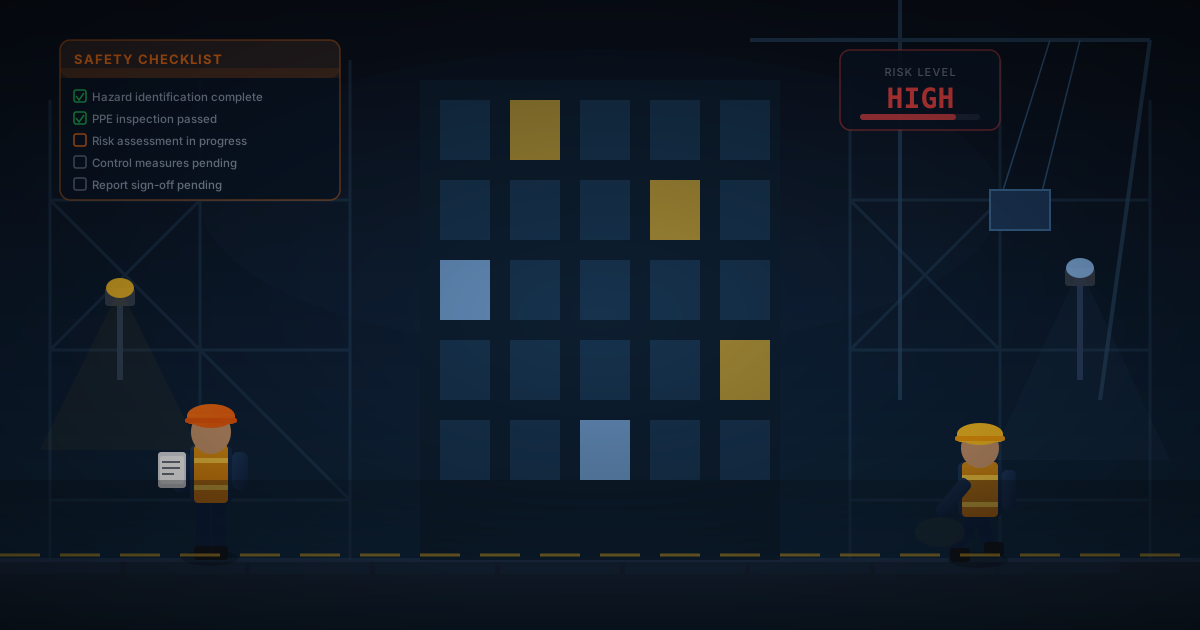
Step 1: Identify the Hazards
The first step is to identify all potential hazards in the workplace. Common workplace hazards include:
- Physical hazards: Slips, trips, falls, noise, vibration
- Chemical hazards: Exposure to toxic substances, gases, dust
- Biological hazards: Bacteria, viruses, mold
- Ergonomic hazards: Repetitive strain, poor posture
- Psychosocial hazards: Stress, workplace violence, burnout
Walk through the workplace, review incident reports, and consult with workers who perform the tasks regularly. They often have the most valuable insight into day-to-day risks.
Step 2: Determine Who Might Be Harmed
Consider who might be affected by each identified hazard. This includes:
- Employees working directly with the hazard
- Other workers in the vicinity
- Contractors and visitors
- Members of the public
Some groups may be at higher risk, such as new employees, young workers, expectant mothers, or those with disabilities.
Step 3: Evaluate the Risks
For each identified hazard, evaluate:
- Likelihood: How likely is it that harm will occur?
- Severity: How serious would the resulting harm be?
- Risk Level: Combine likelihood and severity to determine the overall risk level
The Fine-Kinney method is widely used for this quantitative evaluation:
Risk = Probability × Frequency × Consequence
Risk scores then fall into categories:
- < 20: Acceptable risk
- 20–70: Possible risk (attention required)
- 70–200: Medium risk (corrective action needed)
- 200–400: High risk (urgent action needed)
- > 400: Very high risk (stop work)
Step 4: Implement Control Measures
Use the hierarchy of controls to manage risks:
- Elimination: Remove the hazard entirely
- Substitution: Replace the hazard with something safer
- Engineering controls: Isolate people from the hazard
- Administrative controls: Change the way people work
- PPE: Protect workers with personal protective equipment (last resort)
Always aim for the highest level of control that is reasonably practicable.
Step 5: Review and Update
Risk assessments are not a one-time activity. Review them:
- Regularly (at least annually)
- After any significant changes in the workplace
- Following an accident or near-miss
- When new information becomes available
Using Technology for Risk Assessments
Modern AI-powered tools like FindRisk can dramatically streamline the risk assessment process:
- AI-generated templates: Get industry-specific checklists in seconds
- Mobile data collection: Complete assessments directly on-site
- Photo markup: Annotate hazards on photos in real time
- Automated reports: Generate professional PDF reports instantly
- Corrective action tracking: Follow up on implemented controls
Conclusion
A thorough risk assessment is the foundation of effective workplace safety management. By following these five steps and leveraging modern technology, you can create a safer workplace for everyone—while meeting your legal obligations.
Ready to simplify your risk assessments? Download FindRisk and conduct your first AI-powered assessment today.
Try FindRisk
Ready to modernize your safety workflow?
Conduct AI-powered risk assessments, generate reports instantly, and keep your team safe — anywhere, anytime.