
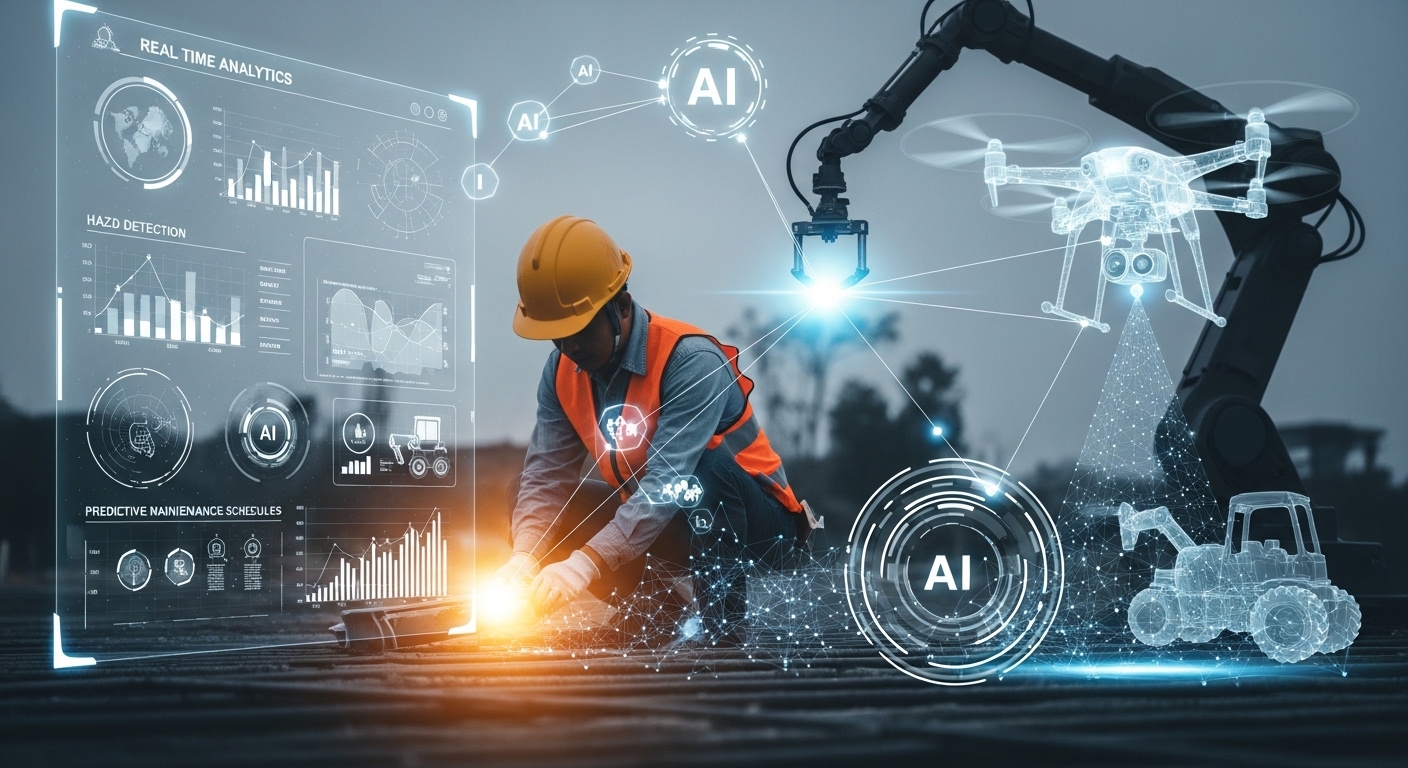
How AI is Transforming Occupational Health and Safety
The Safety Challenge
Workplace accidents cost the global economy over $3 trillion every year, according to the International Labour Organization. Despite decades of progress, traditional approaches to occupational health and safety (OHS) struggle to keep pace with modern, complex work environments.
The answer? Artificial intelligence.
AI is not replacing safety professionals — it is empowering them to work smarter, catch hazards earlier, and respond faster than ever before.
1. Automated Hazard Detection
One of the most promising AI applications in OHS is computer vision for hazard detection. AI models trained on thousands of workplace images can identify:
- Missing personal protective equipment (PPE) — hard hats, vests, gloves
- Unsafe behaviors, such as workers in restricted zones
- Environmental hazards, like spills, blocked exits, or improper stacking
- Equipment in poor condition
These systems can process camera feeds in real time, alerting supervisors the moment a hazard is detected — before an accident occurs.
2. AI-Generated Risk Assessments
Traditionally, creating a risk assessment template required hours of manual work and deep domain expertise. AI changes this.
With a single prompt, modern AI tools can generate:
- Comprehensive checklists tailored to specific industries (construction, manufacturing, oil & gas)
- Fine-Kinney risk matrices with suggested probability and consequence values
- Control measure recommendations based on identified hazards
- Regulatory compliance checklists aligned with local standards
This reduces preparation time from hours to minutes, allowing safety professionals to focus on what matters most — being on the floor with their teams.
3. Predictive Analytics
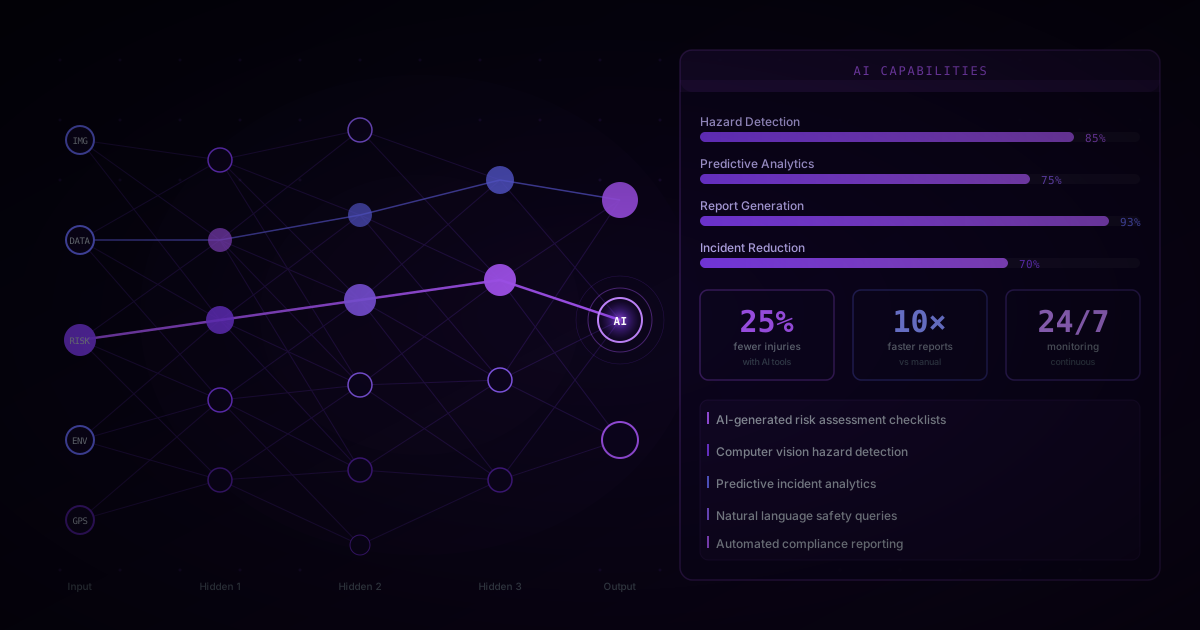
AI excels at finding patterns in large datasets. In OHS, this means analyzing:
- Historical incident and near-miss data
- Equipment maintenance records
- Environmental conditions (temperature, humidity, noise levels)
- Worker fatigue and shift patterns
By identifying correlations that humans might miss, AI can predict when and where the next incident is likely to occur — and trigger preventive action before harm is done.
Studies have shown that predictive safety analytics can reduce workplace injuries by up to 25%.
4. Smart Photo Markup and Analysis
Field inspections generate hundreds of photos. Manually reviewing and annotating them is time-consuming and prone to human error.
AI-powered tools can:
- Automatically identify hazards visible in inspection photos
- Suggest annotations and markup directly on images
- Extract data from photos for report generation
- Prioritize findings by severity
Safety inspectors can review AI suggestions, make adjustments, and produce a complete illustrated report in a fraction of the traditional time.
5. Intelligent Reporting
Compliance reporting is one of the most time-intensive tasks in OHS. AI automates this by:
- Aggregating data from inspections, assessments, and incident reports
- Structuring information in formats required by regulators
- Generating plain-language summaries from technical data
- Flagging trends and outliers for management attention
The result: reports that would take days now take minutes, with greater accuracy and consistency.
6. Natural Language Processing for Safety Communication
Large language models (LLMs) can understand and generate human language, opening new possibilities:
- Safety chatbots: Workers can ask safety questions in natural language and receive accurate, immediate answers
- Document analysis: AI reviews safety procedures, identifies gaps, and suggests improvements
- Multilingual support: Safety instructions translated and adapted for diverse workforces
Challenges and Considerations
AI is a powerful tool, but not without limitations:
- Data quality: AI is only as good as the data it is trained on
- Human oversight: AI recommendations must always be reviewed by qualified professionals
- Privacy: Camera-based systems require careful data governance
- Change management: Teams need training to adopt new AI-powered workflows effectively
FindRisk: AI-Powered Safety, In Your Pocket
FindRisk brings together the most impactful AI capabilities for OHS professionals in a single mobile application:
- AI-generated checklists tailored to your industry
- Fine-Kinney risk assessments with automatic scoring
- Smart photo markup with AI hazard analysis
- Prompt-based insights: Ask questions, get expert-level answers
- Instant PDF reports ready for audits and management reviews
Whether you are a lone safety officer or part of a large corporate EHS team, FindRisk puts the power of AI-driven safety in your hands.
Conclusion
Artificial intelligence is not the future of workplace safety — it is the present. Organizations that adopt AI-powered safety tools today will prevent more accidents, reduce compliance costs, and build a stronger safety culture.
The technology is available. The only question is: when will you start?
Download FindRisk and take your first step toward AI-powered occupational safety today.
Try FindRisk
Ready to modernize your safety workflow?
Conduct AI-powered risk assessments, generate reports instantly, and keep your team safe — anywhere, anytime.